
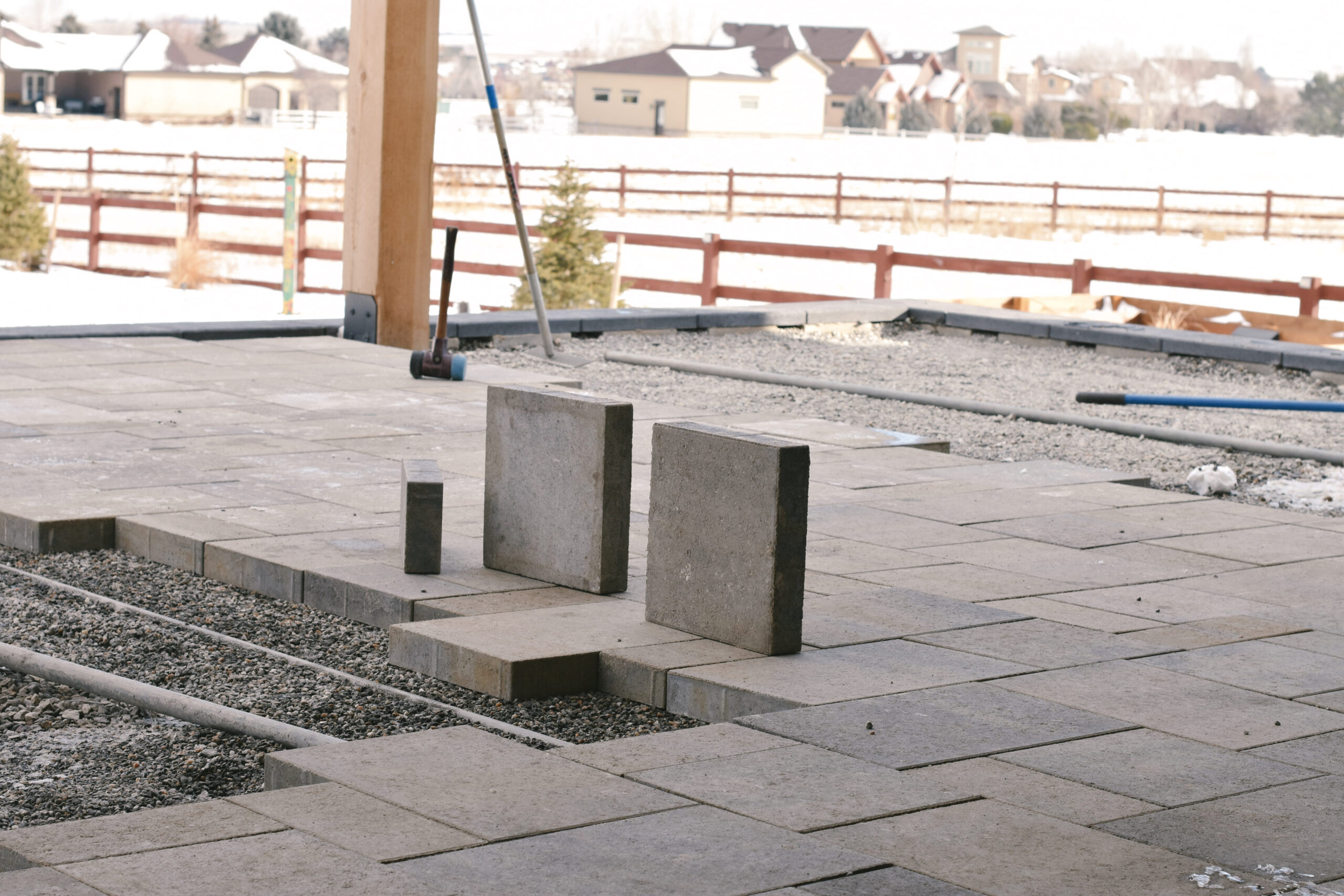
 Your stone patio isn’t just a patch of stone, it’s an outdoor living room, a gathering place for family, a backdrop for summer parties, and a space that connects indoor comfort to nature. But left unmaintained, pavers can shift, joints erode, weeds creep in, and the surface dulls. At Summit Outdoor Living, we now offer full-service paver cleaning, repair, joint filling, and sealing according to Manufacturer specifications and CMHA / ICPI best practices. Let us take care of the heavy lifting (literally), so you can reclaim your weekends, entertain in style, and preserve your investment.
Below is a complete guide to how we approach patio, driveway, pool deck and path maintenance, why it matters, and how we stand apart in the Northern Colorado market.
Why Paver Maintenance Matters — More Than Just Looks
-
Stability & structural integrity
If paver joints are not properly maintained, over time sand can erode, allowing the base material to shift or settle. That leads to uneven surfaces, lippage (height differences), or even loose pavers. -
Prevent weed invasion & insect intrusion
Loose or empty joints invite weeds, grasses, and even insects. A solid joint fill with course sand or polymeric sand helps deter unwanted growth and pest pathways. -
Resist staining, efflorescence & surface wear
Concrete pavers are somewhat porous. Dirt, oil, organic debris, and mineral deposits can discolor them over time. Color enhancing and sealing helps impede absorption and makes cleaning easier. Most paver manufacturers recommend sealing every 3–5 years under normal conditions. Here in Colorado our UV is stronger and you may experience fading sooner. Same with heavy use spaces. -
Extend longevity & maintain beauty
A well-maintained paver surface will outlast a basic concrete patio, preserving color, texture, and aesthetic appeal for many more years.
For busy professionals or parents, this means far fewer emergency repairs, less unsightly damage, and more time enjoying your outdoor space instead of worrying about it.

Step-by-Step: How We Service Your Paver Patio, Path, or Driveway
Here’s a behind-the-scenes look at how Summit Outdoor Living cleans, repairs, fills joints, and seals your pavers in accordance with industry best practices.
1. Site Prep & Clearing
Before we touch your pavers:
-
Remove furniture, pots, grills, pool toys, and other items.
-
Sweep or blow off loose debris, leaves, and sand.
-
Protect adjacent surfaces (e.g. siding, wood, landscaping, pool).
This gives us clear access and avoids damage or overspray to other surfaces.
2. Deep Cleaning & Stain Removal
We begin with full-surface cleaning:
-
Wet the surface first to prevent localized bleaching or chemical damage.
-
Use professional-grade paver cleaner or degreaser tailored to the stain type (oil, rust, organic, mold, etc.). We endorse specialized stain removers (e.g. Techniseal line) that won’t damage pavers.
-
Employ soft to medium bristle brushes or surface cleaning attachments; avoid overly aggressive wire brushes or overly close high-pressure wash (which can dislodge sand or damage the aggregate).
-
Rinse thoroughly and inspect for residual efflorescence (white, powdery deposits). If present, we’ll apply an efflorescence cleaner or paver prep as needed.
3. Repair & Replacement of Damaged Pavers
During inspection, we look for:
-
Cracked or chipped pavers
Pavers that are cracked or broken can be removed and replaced. Depending on when the surface was installed an exact match may not be available. Options and solutions can be discussed. -
Uneven surfaces or depressions
If pavers have settled, we lift, re-level the base, and recompact to restore a flat, flush surface (within ±⅛” tolerance). Additional steps will be taken if paver or tile is adhered. -
Edge restraints & border issues
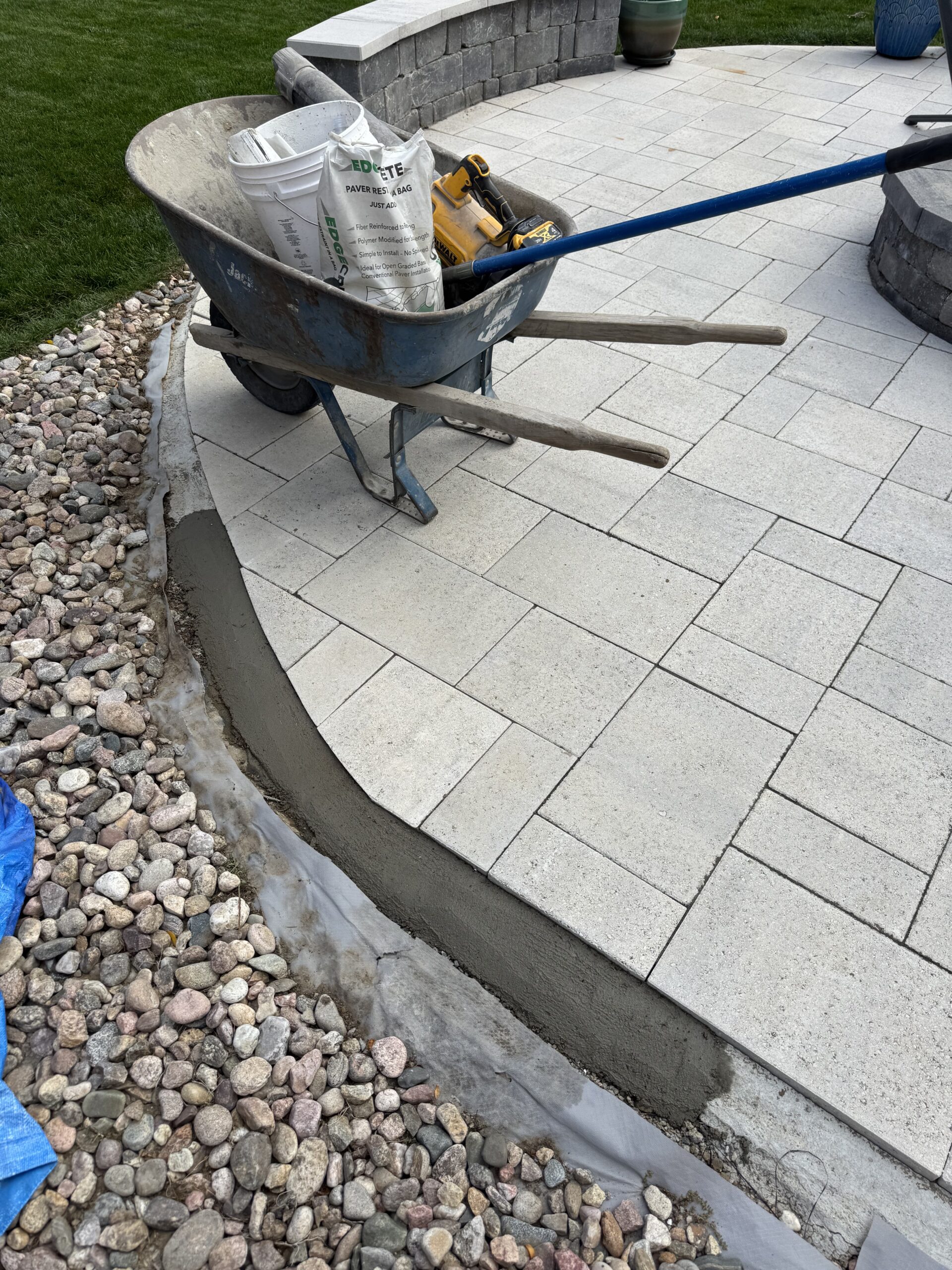
Edge restraints that have shifted or settled are reset or reinforced so the system remains stable.
Once structural integrity is confirmed, we sweep the surface one more time to remove residual dust and debris.
4. Joint Filling
Filling the joints correctly is critical.
-
Use polymeric jointing sand (a mixture of silica sand + polymer binder) that activates with water and locks in place. Course sand is also an appropriate joint filler. Permeable pavements will be filled with a special jointing compound or #89 stone
-
Gradually sweep the sand into all joints, allowing multiple passes to ensure complete filling.
-
Use a plate compactor or vibration to settle the sand and encourage full penetration into the joint depth.
-
Add additional sand to top off any low joints (making sure joints reach the bottom of the chamfer).
-
Mist lightly with water to activate the polymer, forming a semi-rigid bond.
-
Avoid overwatering, which can wash out sand before bonding.
A properly done joint fill dramatically reduces erosion, shifting, and intrusion.
5. Sealing According to Manufacturer Specifications
Now comes the protective layer:
-
Wait for complete dryness. Manufacturers such as Belgard recommend at least 30 days from new installation and ensuring no residual moisture or efflorescence remain.
-
Choose the correct type of sealer based on desired appearance:
• Natural / matte (non-film forming)
• Color-enhancing matte
• Semi-gloss or “wet-look” finish
Belgard cautions against overapplication (do not reseal more than once every 3 years, to a maximum of two overlapping applications). -
Apply in small, uniform sections using a low-pressure sprayer, then roll or broom to even out and remove excess.
-
For film-forming or gloss finishes, a second coat may be applied while the first is still tacky.
-
Maintain a wet edge to avoid lap lines or uneven sheen.
-
Avoid sealing in temperatures below ~50°F (10°C) or if rain is forecast within 24 hours.
This sealing step locks your investment, repels stains, and helps maintain that “just installed” look for years. (Belgard)
Aligning With CMHA / ICPI / Industry Best Practices
Our approach isn’t just based on manufacturer guidance. We also align with masonry and hardscape industry standards:
-
ICPI / CMHA Tech Spec 5 emphasizes joint sand stabilization and sealer application to retain sand and protect the surface.
-
Avoid aggressive power washing. Too much force can scuff aggregate, erode joints, and void warranties.
-
Annual inspections with replenishing joint sand.
-
Make sure slope and drainage remain correct (minimum ~2%) so water never pools or undermines base structure.
-
Use proper repair protocols for depressed areas, ensuring base rebuild before reinstalling pavers.
-
Exercise restraint in deicing chemical use and maintain proper snow removal technique (soft blades, avoid scraping).
By combining manufacturers such as Belgard’s instructions with ICPI / CMHA best practices, we deliver service that meets or exceeds warranties and industry expectations.
Why Choose Summit Outdoor Living — What Sets Us Apart
We understand Northern Colorado homeowners (especially busy professionals and parents) demand reliability, quality, and minimal disruption. Here’s how we deliver:
-
Expertise & materials
We are a Belgard Master Craftsman. Our crews are trained and certified to follow Belgard and CMHA specs and best practices. We use only approved cleaners, polymeric sands, and sealers. Our 26 years in the green industry has brought many different materials and situations our way. -
Full-service turnkey solution
You don’t have to rent equipment, source materials, or sweat the details. We manage everything from prep to clean-up. -
Schedule flexibility & respect for your time
We do our best to coordinate around your project and event timelines so patio and pool readiness is seamless. -
Attention to detail & warranty-level quality
We will do a thorough check over the entire space to make sure all areas are addressed. -
Local presence, local knowledge
We understand Colorado’s freeze-thaw cycles, snow, UV exposure, and how they impact paver systems here. -
Patio prep for entertaining & seasonal transitions
We don’t just restore your space we prime it for parties, outdoor living, and seasonal wear.
Get Ready for Parties & Seasonal Living
One of the biggest benefits our clients tell us: after a service from us, their patio or pool deck is party-ready without lifting a finger. Here’s how servicing your outdoor living space helps your lifestyle:
-
Instant aesthetic refresh
Clean, sealed pavers look newer, colors pop, and the space feels more inviting. No more ugly stains or dull surfaces. -
Safety & usability
Even, stable surfaces mean fewer tripping hazards. Proper sealing reduces buildup. -
Durability over event season
With sealed pavers, spills, foot traffic, and grill residue are easier to manage. Hosting becomes easier with less cleanup stress. -
Seasonal prep
Post-fall cleanup, winter snow/ice resilience, and spring reactivation — we integrate these into your maintenance cycle so your patio, pool deck or driveway is ready when you are.
In short: better performance, better looks, less worry. You can host, relax, and enjoy.
Common Questions (FAQ)
Q: How often should I service or reseal my pavers?
A: Under Northern Colorado conditions, a complete clean + reseal every 3–5 years is common, but you should inspect annually. If water no longer beads on the surface and starts soaking in, it’s time.
Q: Can I just pressure wash and reuse my existing joint sand?
A: That’s risky. Strong pressure can erode joint sand, damage surface aggregate, or void warranties. We prefer controlled cleaning and full joint refilling with polymeric sand for reliable performance.
Q: Will sealing make the patio slippery?
A: It can if too glossy or if application is mishandled. That’s why our team selects appropriate sealer types and ensures we don’t create overly slick surfaces, especially for Colorado’s climate.
Q: Do you have to wait for new pavers to “cure” before sealing?
A: Yes – Paver manufacturers like Belgard generally recommends waiting at least 30 days (sometimes more depending on local conditions) to allow any efflorescence to emerge and the surface to stabilize.
Q: What about winter, snow, and ice management?
A: We advise soft blades or rubber/plastic snow blades (not steel) and limiting deicing chemicals and or mixing with sand.
Q: How much will this service cost?
A: Costs depend on patio size, condition (level of remediation required), sealant choice, and access. But compared to full replacement, this is highly cost-effective. Contact us for a free inspection and estate-level quote.
What is next?
If you’re a busy homeowner in Northern Colorado and your paver patio, driveway, pool deck, or path could use a refresh, let Summit Outdoor Living do the heavy lifting and cleaning. We’ll make sure your space is beautiful, stable, and ready for entertaining or relaxing.
Reach out today to set up your appointment. Let us turn your space into a polished, worry-free outdoor living area you can be proud of without taking time away from your work, your family, or your weekends.
👉 Contact Summit Outdoor Living now for your complimentary evaluation & service quote. https://www.summitoutdoorliving.com/contact/#get-quote